
In today’s competitive digital landscape, creating great content is not just about stuffing keywords or writing lengthy articles. Search engines, especially Google, prioritise quality, trustworthiness, and relevance to deliver the best possible user experience. This is where E-E-A-T comes into play.
If you want your website to rank well, attract organic traffic, and build lasting credibility, understanding E-E-A-T is essential. But what exactly is E-E-A-T? Why is it important? And how can you improve it on your site? Let’s explore everything you need to know.
Table of Contents
- What Does E-E-A-T Mean?
- The Evolution of E-E-A-T in SEO?
- Why Does E-E-A-T Matter in SEO?
- Detailed Breakdown of Each E-E-A-T Component
- Experience
- Expertise
- Authoritativeness
- Trustworthiness
- How Google Uses E-E-A-T to Rank Content
- E-E-A-T and YMYL (Your Money or Your Life) Sites
- How to Improve E-E-A-T on Your Website
- Common Mistakes That Hurt E-E-A-T
- Real-Life Examples of E-E-A-T in Action
- Conclusion
1. What Does E-E-A-T Mean?
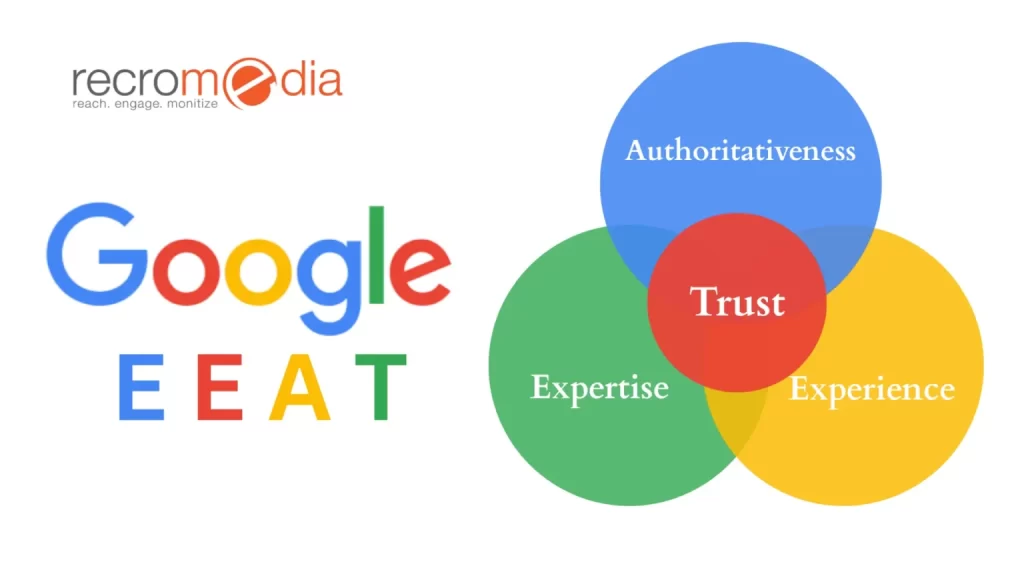
E-E-A-T stands for Experience, Expertise, Authoritativeness, and Trustworthiness. These four factors are used by Google to evaluate the quality of web content and the credibility of websites and content creators.
- Experience: Does the author have firsthand experience or practical knowledge about the topic?
- Expertise: Does the author have formal education, skills, or qualifications relevant to the subject?
- Authoritativeness: Is the content or website recognized as a leader or reliable source by others in the industry?
- Trustworthiness: Can users trust the information, and is the site safe and transparent?
Originally, Google focused on E-A-T (Expertise, Authoritativeness, Trustworthiness), but in 2022, it added Experience to better capture content that reflects real-world knowledge.
2. The Evolution of E-E-A-T
Google introduced the concept of E-A-T with its Search Quality Rater Guidelines (SQRG), which are used by human evaluators to assess the quality of search results. While these guidelines do not directly dictate ranking algorithms, they influence how Google develops and updates its ranking criteria.
The addition of Experience is relatively new and reflects Google’s desire to reward content written by authors who have genuine hands-on experience rather than just theoretical knowledge. For example, a recipe blog written by a professional chef or a product review by someone who has actually used the item will score higher in terms of experience.
3. Why Does E-E-A-T Matter in SEO?
Google’s mission is to organize the world’s information and make it universally accessible and useful. To do this, it wants to rank content that users can rely on, especially when the information affects important decisions like health, finances, or safety.
Here’s why E-E-A-T matters:
- Improved Rankings: Google tends to rank content that demonstrates strong E-E-A-T higher because it is more likely to be accurate and reliable.
- User Trust: Content that shows credibility helps build trust with your audience, encouraging them to engage, share, and convert.
- Reduced Risk of Penalties: Sites with poor E-E-A-T, particularly those providing medical, financial, or legal advice, risk being demoted or penalized.
- Better User Experience: When users find trustworthy content, their satisfaction increases, signalling positive engagement signals to search engines.
4. Detailed Breakdown of Each E-E-A-T Component
Experience
Experience evaluates whether the content creator has firsthand knowledge of the subject matter. This is especially relevant in fields where practical exposure matters:
- A travel blogger who has visited multiple countries has more experience than someone writing from secondhand sources.
- A tech reviewer who uses and tests products will have better insights.
- Testimonials, case studies, and user-generated content can also reflect experience.
Google prefers content created by individuals who actually “know” the topic through real experience, not just research.
Expertise
Expertise refers to the skill or knowledge level of the author in a particular field. This is often demonstrated by:
- Professional credentials or certifications
- Industry experience
- Published works or academic background
- Recognition by peers
For example, medical content should ideally be authored or reviewed by licensed healthcare professionals.
Authoritativeness
Authoritativeness measures the reputation of the content creator, the website, or the organization. It’s about being a recognized source that others respect and cite.
Ways to build authoritativeness include:
- Getting backlinks from reputable websites
- Earning mentions in news or industry publications
- Positive user reviews and testimonials
- Being active in the community through guest posts, interviews, or speaking engagements
Trustworthiness
Trustworthiness is about how reliable and transparent your site is. It includes:
- Secure website protocols (HTTPS)
- Clear and honest content without misleading claims
- Transparent contact information and company details
- Privacy policies, terms of service, and customer service availability
- Accurate product or service information
Trustworthy websites create confidence for users to stay and interact.
5. How Google Uses E-E-A-T to Rank Content
Google’s algorithms are complex and proprietary, but E-E-A-T is a core principle that influences how content is evaluated. While E-E-A-T itself isn’t a direct ranking factor coded into the algorithm, it guides:
- How Google updates its search algorithms
- How human quality raters assess and provide feedback on search results
- The type of content that Google chooses to rank for sensitive or important topics
When Google’s algorithm detects content with high E-E-A-T signals, it is more likely to display it prominently in search results.
6. E-E-A-T and YMYL (Your Money or Your Life) Sites
E-E-A-T is particularly critical for YMYL sites — content that can impact a person’s health, financial stability, safety, or well-being. Examples include:
- Medical advice websites
- Financial planning or investment sites
- Legal information portals
- News organizations reporting on important topics
For YMYL content, Google holds a higher standard, requiring stronger evidence of E-E-A-T to protect users from misinformation or harm.
7. How to Improve E-E-A-T on Your Website
Improving E-E-A-T is a multifaceted process that involves content creation, website design, and reputation management.
Showcase Experience and Expertise
- Include detailed author bios highlighting qualifications, experience, and credentials.
- Create content that reflects real-world knowledge, such as tutorials, case studies, or personal stories.
- Regularly update content to keep information accurate and relevant.
Build Authoritativeness
- Earn backlinks from trusted websites in your niche.
- Get mentions or guest posts on reputable platforms.
- Encourage satisfied customers to leave positive reviews.
- Participate in industry events and public forums.
Enhance Trustworthiness
- Use HTTPS for site security.
- Publish transparent policies: privacy policy, return policy, terms and conditions.
- Provide clear contact information and customer support channels.
- Avoid deceptive tactics like hidden fees or fake testimonials.
Additional Tips
- Use clear, readable formatting with headings and bullet points.
- Incorporate multimedia like images, videos, or infographics to support your points.
- Avoid spelling and grammar mistakes to maintain professionalism.
- Engage with your audience through comments and feedback.
8. Common Mistakes That Hurt E-E-A-T
- Anonymous or low-quality content: Content with no clear author or poorly researched information lowers trust.
- Outdated information: Not updating old content can cause inaccuracies, especially for fast-changing topics.
- Hidden or misleading information: Lack of transparency about products, services, or policies erodes trust.
- Poor website security: Lack of HTTPS or visible security signals deters users and Google alike.
- Lack of credible backlinks or social proof: Without signals from others, Google may see your site as less authoritative.
9. Real-Life Examples of E-E-A-T in Action
Example 1: Health Website
A medical advice website authored by certified doctors, with references to scientific studies, HTTPS security, clear contact info, and positive user reviews, is likely to rank well due to strong E-E-A-T signals.
Example 2: Travel Blog
A travel blog written by a seasoned traveler with firsthand experiences, detailed itineraries, and authentic photos can outperform sites with generic or copied content, showcasing high experience and expertise.
Example 3: E-commerce Store
An online store that provides transparent return policies, secure payment options, and detailed product descriptions, alongside customer testimonials, will build trustworthiness and authoritativeness.
10. Conclusion
E-E-A-T—Experience, Expertise, Authoritativeness, and Trustworthiness—is more than just an SEO buzzword. It represents Google’s commitment to ranking content that users can rely on and trust.
By focusing on improving your E-E-A-T, you enhance your website’s chances of ranking higher, attracting quality traffic, and building lasting credibility. Whether you run a blog, a business website, or a complex informational portal, prioritizing E-E-A-T is essential for sustainable SEO success.